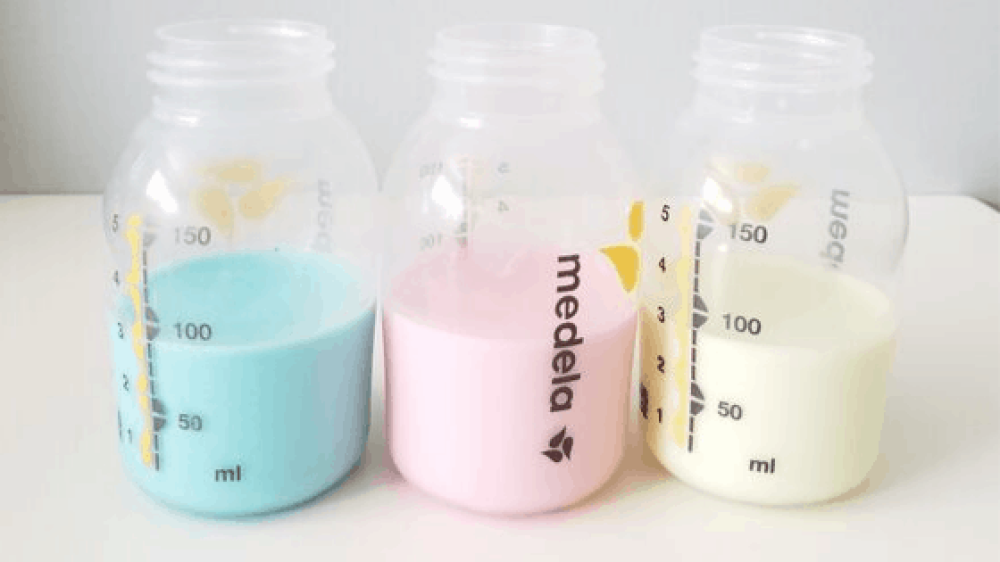
You’re likely aware of the benefits of breast milk. It contains antibodies to help strengthen a baby’s immune system, and some babies have an easier time digesting breast milk than digesting formula.
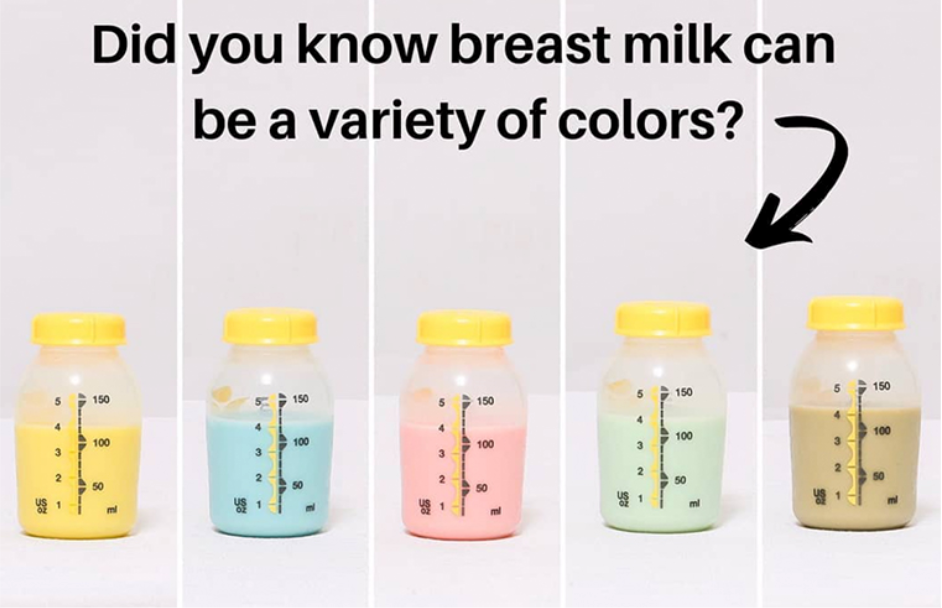
But if you’re new to breastfeeding, you might be unaware of the different colors of breast milk. You may assume that breast milk is the same color as formula or cow’s milk. Yet, its color can vary considerably.
Don’t worry! Producing different colors of breast milk isn’t usually a cause for concern. That said, it’s important to understand why the color of breast milk might change from time to time.
What’s the “normal” color of breast milk?
A color that’s normal for one mother might not be normal for another — so you shouldn’t necessarily go out and compare color notes with all your breastfeeding friends. But in most cases, breast milk is lighter in appearance, usually white, although it can have a slightly yellowish or bluish hue.
Here’s what you need to know about the colors you may see, including when you should worry about a color change.
What makes breast milk yellow?
Colostrum
If you’ve recently given birth, you might be surprised to see thick yellow breast milk rather than white milk. This is completely normal, and many mothers produce yellow milk during the first few days after delivery.
This is called colostrum, or first milk, since it’s the first milk your breasts produce after delivery. Colostrum is rich in antibodies and thicker, and you’ll produce this milk for up to 5 days after giving birth.
Diet
You may continue to produce yellow breast milk even months into breastfeeding, especially if you eat foods that are yellow or orange in color, such as carrots or sweet potatoes.
Freezing
It’s important to note that the color of breast milk can change after freezing. Your breast milk might initially appear white and then change to a slightly yellow color, which again is perfectly normal. This doesn’t indicate a problem with your milk supply.
What makes breast milk white?
White is the color that most people expect to see when breastfeeding or pumping. What’s interesting, though, is that the body doesn’t typically produce white breast milk until a few days postpartum. This occurs when milk transitions from first milk (colostrum) to mature milk. Your milk supply also increases during this time and continues to do so during the first 2 weeks after delivery.
Everyone is different, so during this transition, your breast milk might go from a dark yellow to a light yellow, or from a yellowish color to completely white.
What makes breast milk blue?
It’s also normal to have slightly blue breast milk. A bluish hue is often noticeable at the beginning of pumping or nursing. This milk (foremilk) is thinner and contains less fat and more electrolytes. Toward the end of a feeding or pumping session, milk (hindmilk) becomes thicker and contains more fat, resulting in a creamier white or yellowish color.
If you’ve ever noticed that the skim cow’s milk you buy at the store can have a blueish hue, it’s for similar reasons — less fat.
What makes breast milk green?
Don’t be alarmed if you see green breast milk. Think back to what you recently ate. You most likely ate a green-colored food that changed the color of your breast milk — maybe a green smoothie or a bunch of green vegetables.
Don’t worry, your breast milk will return to its normal color. Pat yourself on the back for those healthy food choices!
What makes breast milk pink or reddish?
Diet
Pink or reddish breast milk has a couple of explanations. Similarly to when you eat or drink something green, consuming reddish foods and drinks — think strawberry smoothies, beets, and foods containing red artificial dye — can change the color of your breast milk.
Blood
In addition, trace amounts of blood in your breast milk can cause a color change. But this doesn’t always indicate a problem.
You may have cracked nipples that bleed, or a broken capillary in your breast. In either case, the bleeding will stop as your body heals. In the meantime, you don’t have to stop breastfeeding or pumping.
However, if your milk doesn’t return to its usual color after a few days, call your healthcare provider. Blood in breast milk is also a sign of a breast infection.
What makes breast milk black?
If the color of your breast milk resembles black or brown and you’re taking medication, in most cases, you can blame the medicine. This might happen if you take the antibiotic minocycline (Minocin).
Before taking minocycline or any other medication, let your healthcare provider know that you’re nursing. Some are perfectly safe despite their ability to alter the color of breast milk, while others may require that you take an alternative medicine.
Color changes to expect when breastfeeding
Here’s what to know about the different types of breast milk, including color changes that can occur with each stage.
Colostrum
the first milk your breasts produce after delivering your baby
lasts up to 5 days postpartum
rich in antibodies
yellowish color
Transitional milk
the milk your breasts produce between the colostrum and mature milk stage
lasts between 5 and 14 days postpartum
yellowish or orange in color with a creamier appearance
Mature milk
the milk your breasts produce starting at about 2 weeks postpartum
foremilk appears white, clear, or blue at the beginning of each feeding and then becomes creamier, thicker, or yellow toward the end of each feeding (hindmilk)
Factors that contribute
If your breast milk is any color other than white or blue, here’s a summary of common explanations:
Yellow/Orange Green Pink/Red Black
– Eating carrots, squash, and yellow/orange vegetables
– Freezing breast milk
– Drinking orange soda or drinks – Eating or drinking green-colored foods and drinks – Eating or drinking red-colored foods and drinks
– Cracked nipples or broken capillaries – Medication
– Vitamin supplements
You may notice some common themes. Factors that most often contribute to color changes in breast milk include:
eating foods with artificial dyes
consuming foods rich in beta carotene (carrots, squash, etc.)
eating green vegetables
drinking colored soda and other beverages
taking medications or vitamins
cracked nipples or ruptured capillaries
freezing breast milk
Be mindful that the above doesn’t only change the color of breast milk, it can also change the color of your baby’s poop. So if you’ve recently eaten beets and your baby’s stool turns red, don’t immediately panic.
When to see a doctor
Typically, you only need to see a doctor for reddish or pinkish breast milk that doesn’t improve. Cracked nipples or ruptured capillaries usually heal in a couple of days, at which point breast milk returns to its normal color.
If you continue to produce red or pink milk, this could indicate another problem, such as a breast infection or breast cancer. You should also see a doctor if you produce black or brown breast milk to make sure your medications and supplements are safe to take while nursing.
The takeaway
When breastfeeding is a new experience, you might be unfamiliar with the varying colors of breast milk. Just know that it’s perfectly OK for your milk to change color. Even so, if you have any questions or concerns, talk to your doctor.
Source :Breast Milk Color: From Yellow to Blue to Pink, What It All Means